



The Dutch Photographer Who Inspired Goldin and Tillmans


Who? Ed van der Elsken was a romantic, a self-biographer and a documentarist, obsessed with youth, protest, sexuality and the sub cultures on Europe’s streets. His loose, candid and casual images feel especially pertinent today, in a world where daily documentation comes as second nature. Just as, for many, the smartphone has become an extension of their bodies, Van der Elsken once said that he’d “have liked to have transplanted a camera into his head to permanently record the world around him.” As Colin van Heezik writes in the new exhibition catalog Camera in Love, Van der Elsken “presaged our image culture.”


Born in Amsterdam in 1925, Van der Elsken trained as a projectionist before he turned to photography, and the heartbreak of a failed engagement sent him wandering around Paris. It was in the French capital that he began working at Magnum Photos in 1950 and oh, what a time! Having opened only one year previously, it was the first agency where its photographers could retain ownership of their images. Here, Van der Elsken worked in the darkrooms of Henri Cartier-Bresson and Robert Capa before meeting his first wife, Hungarian photographer Ata Kandó and moving to the Left Bank where he began to capture the bohemians on the streets of Paris.


What? Ed van der Elsken had three wives over his life, each impacting on, and appearing in, his work. Edward Steichen, the curator of photography at MoMA had encouraged van der Elsken to turn the intimate portraits of his relationship with Ata Kandó into a fictionalized photo novel, Love on the Left Bank – his first publication. Photographer Nan Goldin wrote of her kindred spirit with Van der Elsken, discovered in his intimate self-portraiture. “Like Ed, I wrote myself in as the lover. Sometimes, the obsession lasted for years. It was photography as the sublimation of sex, a means of seduction, and a way to remain a crucial part of my subjects’ lives. A chance to touch someone with a camera rather than physically. It is this notion – of being obsessed with someone, and, through photographs, making that person iconic – that resonated with me in his work.”


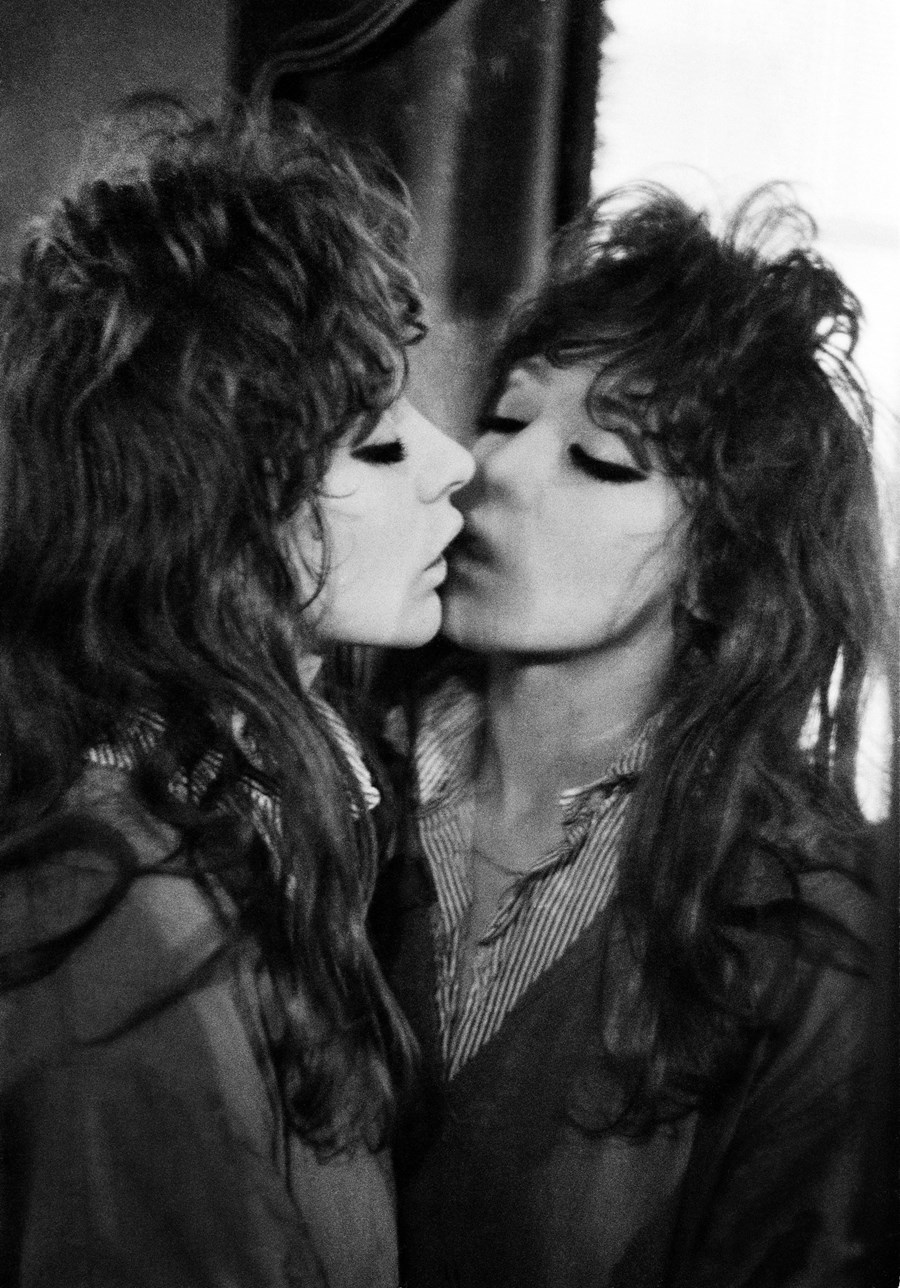
The photographer captured wildly varied subject matter: Holland’s great flood of 1953, the rock’n’roll lifestyle of Germany’s beatniks (the Halbstarken), the Dutch protests during the Soviet invasion of Hungary, the anti-Vietnam occupation protests in Japan, Tokyo street style and the slaughter of elephants in Central Africa to name just a few. His lens knew no hierarchy – in fact, it was the diversity of humanity that he aimed to capture: all ages, sexualities, races, walks of life, “my people,” he called them. But the intimacy that he captures with each of his three wives offers a mirror to his entire body of work and its rawness, the power to channel almost animalistic emotion from almost any situation.
Why? As Amsterdam’s Stedelijk museum opens the largest ever retrospective of Ed van der Elsken’s work this month, the beautiful accompanying catalog Camera in Love (Prestel), goes on sale. As Goldin suggests in her essay, “Ed didn’t quite get the attention he deserved” – this new time poses the idea that perhaps now, the photographer’s time has come. While his images resonate with our contemporary image culture, Van der Elsken’s careful attention to celebrating the diversity and individuality of his fellow humans – not to mention their propensity to rebel and protest – feels even more pertinent than his love of a selfie.